Pool Deck Resurfacing in Phoenix — Cool, Safe, and Updated
Your pool deck takes more abuse than almost any surface at your house — bare feet, pool chemicals, sun, and thermal cycling year-round. In Phoenix, an aging deck isn't just an eyesore: dark concrete surface temperatures can exceed 150°F on a summer afternoon. Resurfacing gives you a cooler, safer, updated deck surface without the cost or disruption of a full replacement.
When Your Deck Becomes a Problem, Not a Feature
Cracks are the most visible sign — once a Phoenix deck starts cracking, thermal movement keeps widening them every summer. Water infiltrates the cracks, erodes the sub-base, and makes the cracks worse. What starts as cosmetic becomes structural. And a cracked, uneven deck is a slip and trip liability, especially around a wet pool area.
The heat is the second issue. Original "cool deck" coatings applied to pools built in the 80s and 90s are typically long gone — worn off, peeled, or painted over. Without a reflective coating, concrete and pavers in a Phoenix pool area can reach temperatures that cause real burns on bare feet in seconds. Resurfacing with a heat-reflective coating or travertine pavers solves this for another decade.
A faded, cracked, scaling deck also makes the entire backyard feel neglected — even when the pool water is crystal clear. The deck frames the pool. When it looks bad, everything around it looks bad.
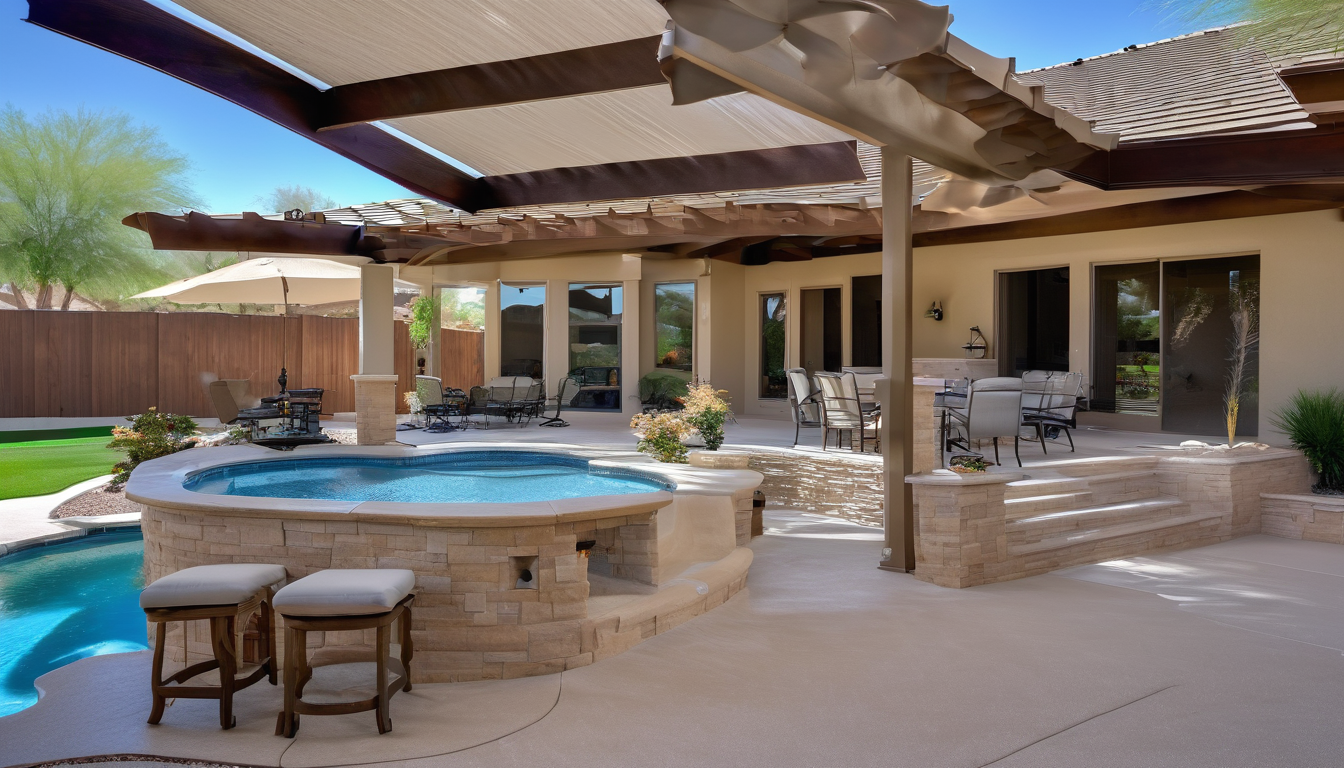
How Pool Deck Resurfacing Works
Estimate & Option Review
We assess the deck condition and walk you through surface options — cool deck coating, decorative concrete overlay, travertine pavers, or spray texture. Written quote provided.
Prep & Crack Repair
Deck is cleaned, old coatings removed where needed, and cracks are filled and stabilized before any new surface goes down. Surface prep determines how long the new finish holds.
Surface Application
New coating or paver installation completed. For coatings, multiple layers applied for durability. For travertine, dry-set over existing concrete slab with appropriate drainage slope maintained.
Cure & Final Inspection
New surface cures fully before foot traffic. We walk through the finished deck with you and provide maintenance guidance for your specific surface type.
What Every Deck Resurfacing Job Includes
- Full deck assessment and crack mapping
- Surface prep, cleaning, and crack repair
- New surface application — coating, overlay, or paver installation
- Drainage slope maintained throughout
- Written fixed-price quote before work begins
- Workmanship warranty on completed deck work
What Does Pool Deck Resurfacing Cost in Phoenix?
Pool deck resurfacing in Phoenix runs $2,500–$8,000 depending on deck size, surface type, and condition. A coating over an existing deck is least expensive; travertine paver installation over a larger deck runs highest. Crack repair and sub-base work is quoted separately if needed. Your estimate will cover the full scope — no surprises.
Questions We Hear Most
What's the difference between cool deck coating and travertine pavers?
Cool deck and Kool Deck are spray-applied acrylic coatings that reflect heat and provide a textured, slip-resistant surface. They're cost-effective and fast. Travertine pavers are individual stones set over your existing slab — they stay significantly cooler underfoot (natural stone doesn't absorb heat the way concrete does) and have a premium look. Both are significant upgrades over bare concrete.
Can you resurface the deck and pool at the same time?
Yes, and we often recommend it if both are at end of life — it's one drain, one mobilization, one project. We'll assess both and give you a combined quote.
How long does the project take?
Most deck resurfacing projects take 2–4 days. Travertine paver installation takes slightly longer for larger decks. Cure time before foot traffic varies by surface — we'll tell you exactly what to expect.
How hot does Phoenix concrete get?
Dark concrete in direct Phoenix summer sun can reach 150–175°F surface temperature. That's hot enough to cause burns in seconds on bare feet. Light-colored reflective coatings and natural travertine can reduce surface temps by 40–60°F.